
Caution: Road Work Ahead
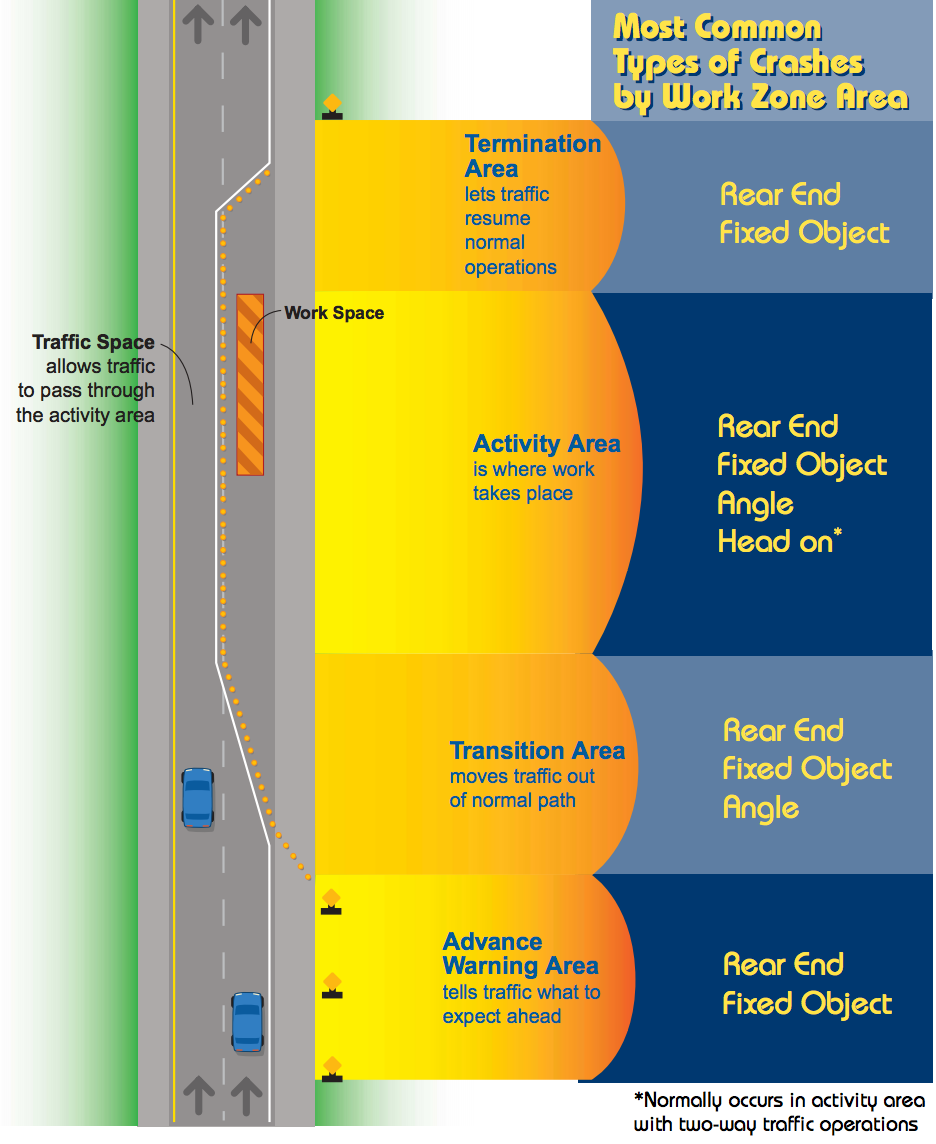 AT THIS TIME OF YEAR, work zones are part of the nation’s highway landscape. In addition to the traffic jams these roadway stretches create, work zones can harbor a number of hazardous conditions for drivers, such as closed, narrowed or shifted lanes; concrete barriers and barrels; uneven pavement; reduced sight distance; vehicles that make sudden stops; and, equipment and people working on or near the road.
Night work zones, which have become increasingly common to reduce lane closures and congestion during peak daytime traffic, are particularly hazardous due to the poor visibility. Darkness makes it more difficult for drivers to see everything around them, despite the use of construction lights and reflective worker clothing, and at night, it’s more likely that driver fatigue will be an issue.
And, while road construction is often what comes to mind in regards to work zones, it’s important to remember that any work activity (i.e., trash collecting, grass mowing and utility work) that takes place on and along urban and rural roadways can create challenging driving situations.
More Work To Do
While work zone fatalities have decreased by 34 percent since 1999, there is still much room for improvement. In 2013, the most recent year for which data is available, there were:
• 579 work zone traffic-related fatalities (6% decrease from 2012)
• 29,000 work zone injuries (9% decrease from 2012)
• 105 worker fatalities (21% decrease from 2012)
• 184 large trucks and 2 buses involved in fatal crashes in work zones (11% increase from 2012).
The latest statistics also show that speeding was a factor in more than 23% of fatal work zone crashes. However, other driver-related factors such as distractions (i.e., cell phones, texting, and radios), inattentive driving and aggressive driving often contribute to work zone collisions.
What Drivers Can Do
The reality is that many of these accidents, injuries and deaths can be avoided and drivers play a key role in making work zones safer for everyone, especially themselves. These tips can help you get in and out of a work zone safely.
• Know Before You Go. Before departing, check the radio and television, as well as state DOT and the Federal Highway Administration (FHWA) websites for any work zones along your route and schedule enough time to drive safely. If you think you might be delayed, consider using an alternate route that bypasses the construction zones, or leave earlier to reach your destination.
• Expect Anything. Work zones can appear at any place, anytime and traffic patterns can change daily. Road workers, construction vehicles and equipment can enter your lane without warning. Other vehicles may slow, stop or change lanes unexpectedly. Moreover, many motorists rush toward the front of traffic and force their way in at the last minute – often targeting a commercial motor vehicle for their point of entry. Don’t let any of this behavior surprise or aggravate you. Staying alert and aware of what’s happening around you will help you safely navigate these congested areas.
• Merge Early. When you see signage related to a work zone ahead, merge well in advance of lane closures to avoid squeezing your vehicle into the traffic flow. Once you’re in the zone, traffic often merges into fewer lanes, so always make a visual check for motorists racing to get ahead of you by using your mirrors. Remember, caution and courtesy help reduce the chance of a sideswipe.
• Manage Your Speed. Slow down when approaching work zones. Obey posted speed limits within work zones and keep up with the traffic flow. Do not slow down to “gawk” at road work. Don’t resume normal speed until you see roadway signs indicating it’s safe to do so. Adjust your speed for weather conditions and remember: Nearly all states have laws that increase the penalties for speeding or committing other traffic violations while in a construction work zone.
• Obey Flaggers and Warning Signs. Conditions can change quickly and often in a single work zone, and road crew flaggers are there to guide you to the safest path through the area. In a work zone, flaggers have the same authority as a sign, which means that you can be cited for disobeying their directions. Warning signs communicate distances to work areas and the proper steps necessary to proceed safely through the work zone… obey them.
• Keep A Watchful Eye. Continuously scan the work zone and be prepared to react. Watch the traffic, especially brake lights on vehicles ahead, as well as workers, traffic flaggers and any moving or parked equipment. Keep in mind that not seeing workers after you encounter warning signs doesn’t mean they’re not in the area.
• Manage Your Space. Be very mindful that the tight conditions of work zones require drivers to pay close attention to space around their vehicle. The most common crash in a work zone is a rear-ender, so leave 6 or more seconds of space between you and the vehicle ahead and even more space when road conditions deteriorate with bad weather or rough surfaces. Also, keep a safe distance between your vehicle and traffic barriers, trucks, construction equipment and workers.
• Leave Yourself An Out. When stopped in traffic, leave a safety cushion between you and the vehicle in front of you in case anything goes wrong. A good rule of thumb is that, when stopped, you should be able to see the bottom of the tires of the vehicle ahead of you. However, don’t change lanes unnecessarily.
• Stay Alert And Minimize Distractions. Dedicate your full attention to driving; workers and heavy equipment may only be a few feet from passing vehicles. Avoid eating, changing radio stations or any other activity that can divert your concentration from the road.
• Manage Your Stress. Relax and take your time getting through the congestion. Worrying about the time and traffic won’t get you anywhere faster. Set an example by being courteous in your driving demeanor. Remember, a work zone is only a temporary inconvenience.
• Wear Your Seatbelt. It is your best defense in a crash. Today’s work zones lead to improved safety and mobility on your roads tomorrow. If everyone stays calm, stays alert, slows down and cooperates, traveling through these zones will be much more efficient. As the professional driver, it’s up to you to take the lead.
For more information about work zone safety, please visit the following websites:
• Work Zone Safety for Drivers